Socialize the Archive
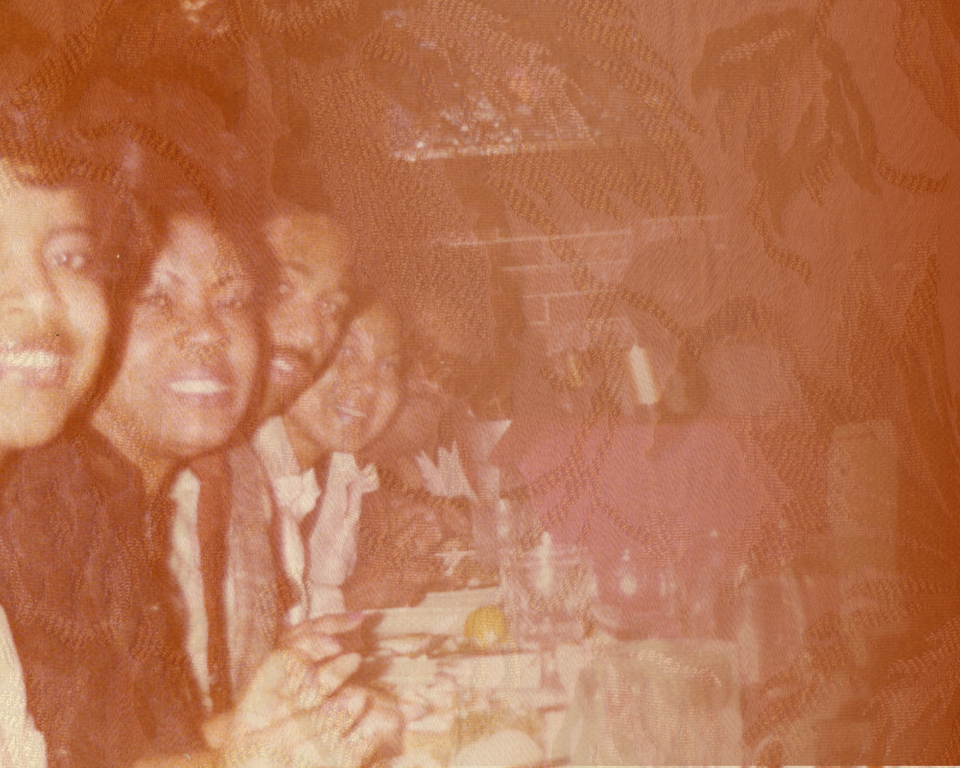
No matter how many prying questions for my elders go unanswered, I have found comfort in the understanding: where physical record-keeping falls short, people continue. Life continues.
Perennial Memory Lab is a public practice of archival study and stewardship with the goal of making ancestral mysteries, rituals, and silences legible as relational preservation systems, rather than strictly technical ones. Our call to 'socialize the archive' holds both memory and future as collaborative processes that create the possibilities for new worlds. An emphasis on relationship is a big part of what distinguishes the methods Perennial teaches in our workshops, but it is also what challenges me most as a practitioner. After three summers of this nomadic learning project, I'm revisiting PML's archives and my early intentions as the personal + political context of this work evolves. Can I get a witness?
There is no denying the importance of more rigorous forms of traditional archival research, but we might all benefit from deprioritizing institutional belief systems for the time being.
That goes to say that the generational questions we inherit with these collections of images and stories are not necessarily asking us to make sense of the past. There is a strength to be gleaned from the inquiries that point us back to ourselves. More to be gained from the endeavor of curiosity or the riddles of master storytellers than definitive answers. Through research as a practice of ancestral veneration, I have come to believe that these silences are more likely preparing us for the next great cultural and technological shift of memory: the collapse of empire.
Hear me. I write urging you to feel, rather than strictly to reason. Our ancestors survived, witnessed, grieved, and celebrated more than we could ever make sense of, even with the modern technologies at our disposal. The kind of truths that survived the middle passage and the ongoing extinction events of our time are not meant to be so easily understood. It is largely thanks to their enduring cleverness and humor that we have been able to rebuild each time a world ends. And what good is an archival preservationist if not to advocate for the preservation of a living people? About as useful as an idea that hasn't been tempered in the arena.
Just like colonial violence invents new ways to conceal itself with every generation, the Black tradition has developed its own ways of dealing with trickster energy.
As my research moved away from flattened aesthetics of Black nostalgia and into the formative politics of a worthwhile Black future, I'm reminded of the tempered wisdom in my Southern grandmother's secrecy. Perennial has primarily operated through intimate workshops, but events require time and resources that I am not afforded right now. Sharing online feels like the best way I can continue practicing with relational accountability, but it's a tradeoff. In a physical space, we can establish consent together though directly maintained agreements and actions. In digital realms, we give our consent to the medium rather than to an individual who has earned our trust.
There will come a day when I cannot post radical ponderings from behind the relative safety of a keyboard or the immediacy of the internet. There may soon come a time when the surveillance risks of our cell phones outweigh the communication benefits. Even sooner, we will encounter the financial and ethical dilemmas of how to afford autonomous digital storage (like SD cards or hard drives, not a platform that could erase or claim ownership of your data), which is being phased out in favor of AI and priced up due to wars of attrition.
I do not mean to judge or frighten anyone who sees these trajectories as far-off inconveniences. I make this appeal to socialize our archives because I, too, have spent years investing in technologies and institutions that erode the likelihood of a livable future. Taking fewer creative risks in favor of a material stability that continues to elude me. The better part of this past year, I've sidelined my own practice to pay the bills by quietly authoring work for various organizations. Seldom met with the respect or wages that I've earned, yet I see the influence of my ideas employed with little regard for what made them sacred to me. Now I tenderly sift through the 4TB hard drive containing nearly 3 years of workshops, research, and prototypes, remembering the unfulfilled promise I made to share Perennial's work as a public resource.
I've too long heeded the warnings of academics who attended my early workshops and were shocked to find out I was sharing my unpublished theories. Yes, there remains the risk of ideas being stolen and repackaged, but that feels like too convenient a reason not to share imperfect works. I try not to be overly concerned with personal ownership of what belongs in the cultural commonwealth, while understanding the protective importance of citing my contemporaries. This work has a far-reaching lineage that relies on our acknowledgements of influence.
I do recognize we've created something of value here and, if not stewarded responsibly or held to a broader accountability, it is likely to be exploited. Whether it's land or intellectual property, I believe my role as a steward is to continue the efforts of those who came before me. In the (paraphrased) words of my dear friend and mentor Jason E.C. Wright, "the beauty of being a steward is that you don't have to die behind it. Just further the mission as much as you can, with the time and direction you're given."
One of the most challenging parts of maintaining any practice is that it requires you to live and lay rest the changes, over and over again. To do so publicly can feel like grieving in a glass house.
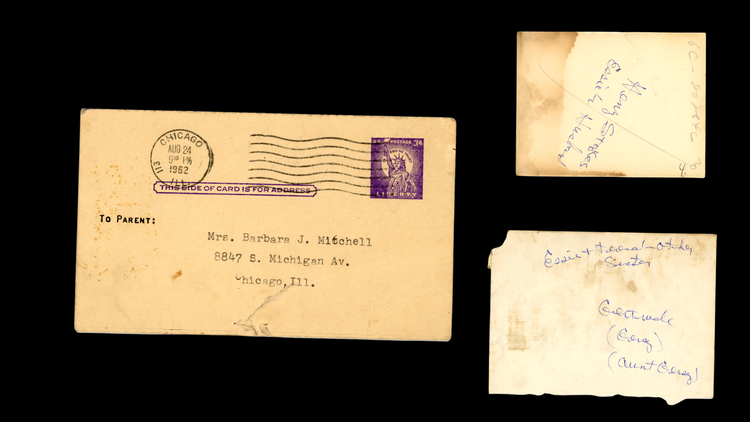
Picture me with a home that's as full of memories as my hard drive is right now. It would be nearly unlivable. No room to move through the halls, hang new photos, or invite more stories in. Not unlike the cluttered garages and jammed drawers where many of us first encountered our family archives, layered with a thick dust and years of neglect. Each time I revisit old work, I learn to depersonalize what once felt like core parts of my identity. Collective memory then functions as an auditor of the ways we are all capable of violence and redemption. My hesitancy to share was not necessarily to protect my IP, but also to shroud my wounded ego and to some extent my politick in a world that feels increasingly hostile to my assertions of sovereignty as a queer Black cultural worker.
Yet the safety of isolation is a short-lived illusion. We can do right by each other or we could both be wrong alone.
Please understand, my introduction to memory work was through conflict and secrecy. I know what it's like to have questions you have not yet earned the answer to. I've seen disputed storylines of unacknowledged harms lead to lasting estrangement. With so many reactive personal histories, I founded PML because I needed to find a community of learners who were willing to make something of the pieces together. Facilitating in-person workshops was always a mutual learning experience and I'm grateful for the ways these moments of connection disrupt my fears. Even if PML has operated with 3 of me in a trench coat, it is truly a collaboration with every person who was trusting enough to participate. Some lessons gained in solitude can only be applied through togetherness.
Relationship is such a masterful teacher. I don't want to become estranged from the parts of myself that can conceive of a better world just because I am unwilling to meet the vulnerability that requires of me. I also don't want to stop engaging with the community Perennial has built over the years just because it has to be done differently than before. Sorted through some of this dysfunction during a recent sojourn to empty the furniture and trinkets from my semi-vacant childhood home, unable to bring them cross-country with me or put them into an indefinite storage unit. Healthiest thing I could do at the time was give my things away to people who could make better use of them, be it to friends or wanting strangers. And that's exactly what I have to do with Perennial's lost files now.
So here are some questions that help me get unstuck when I feel a misplaced attachment to what I can no longer hold alone –
If these things are truly precious, why should they end with me?
If this (object/knowlege/story) is no longer safe in my care, where could it be rehomed for its next life?
What care instructions can I offer the next steward as my time concludes?
However you've encountered the work of Perennial Memory Lab over the years, I thank you for your curiosity and insight. Thank you for holding me to what I believe in and extending grace for what I have yet to learn. How I understand the usefulness of this work is always changing, but to exist in a community of learners keeps me upright in purpose. As I ready myself to resume a steady public practice through this process blog, please know my online presence still abides by the 'collective learning agreement' we're known to open all of our programs with. These are not purely rhetorical invitations. I want to continue learning through your feedback, questions, and reception.
If what I share lends value to your life and work, please consider becoming a free or paid subscriber. I hope we can find ways to connect as we would in a room together.
Member discussion