Black Care Ontologies & Decolonial Memory-Keeping
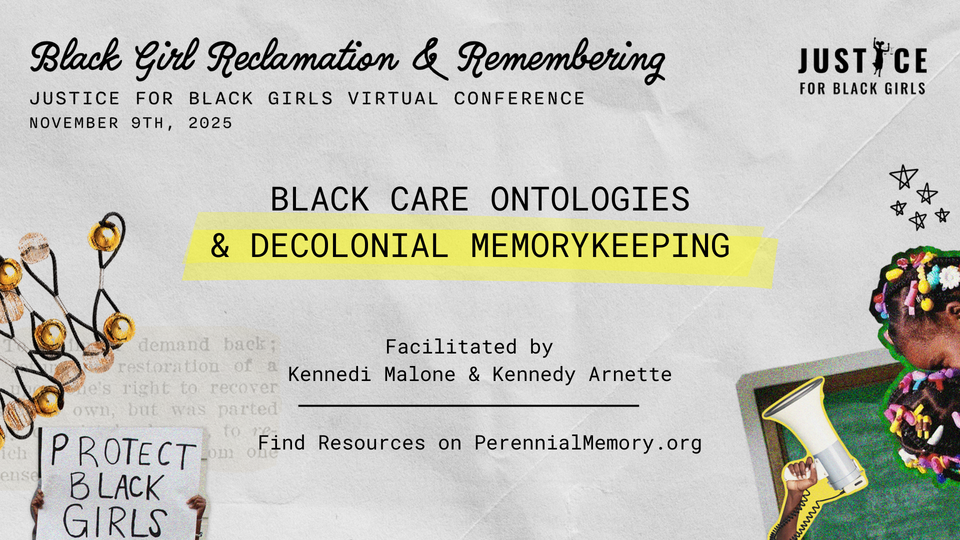
Recommended reading & continued discussion from the 7th annual Justice for Black Girls conference on Reclamation & Remembering, featuring keynote speaker, Angela Davis—Breakout workshop co-facilitated by Kennedi Malone and Kennedy Arnette.
Program Description & Reflections
Grateful to support Justice for Black Girls as a virtual conference facilitator for the second year in a row, we knew we had to up it! Last year, my dear sib and JBG collaborator Kennedi Malone invited me to speak about decolonial memory-keeping and the frameworks of care embedded in Black feminist scholarship on the subject. We oriented most of our discussion around Sadiyah Hartman's Venus in Two Acts, a foundational favorite that you've likely seen referenced in much of Perennial's early offerings. This year, we continue the conversation by sharing an expanded list of beloved texts and recent experiences that keep
Guiding Questions
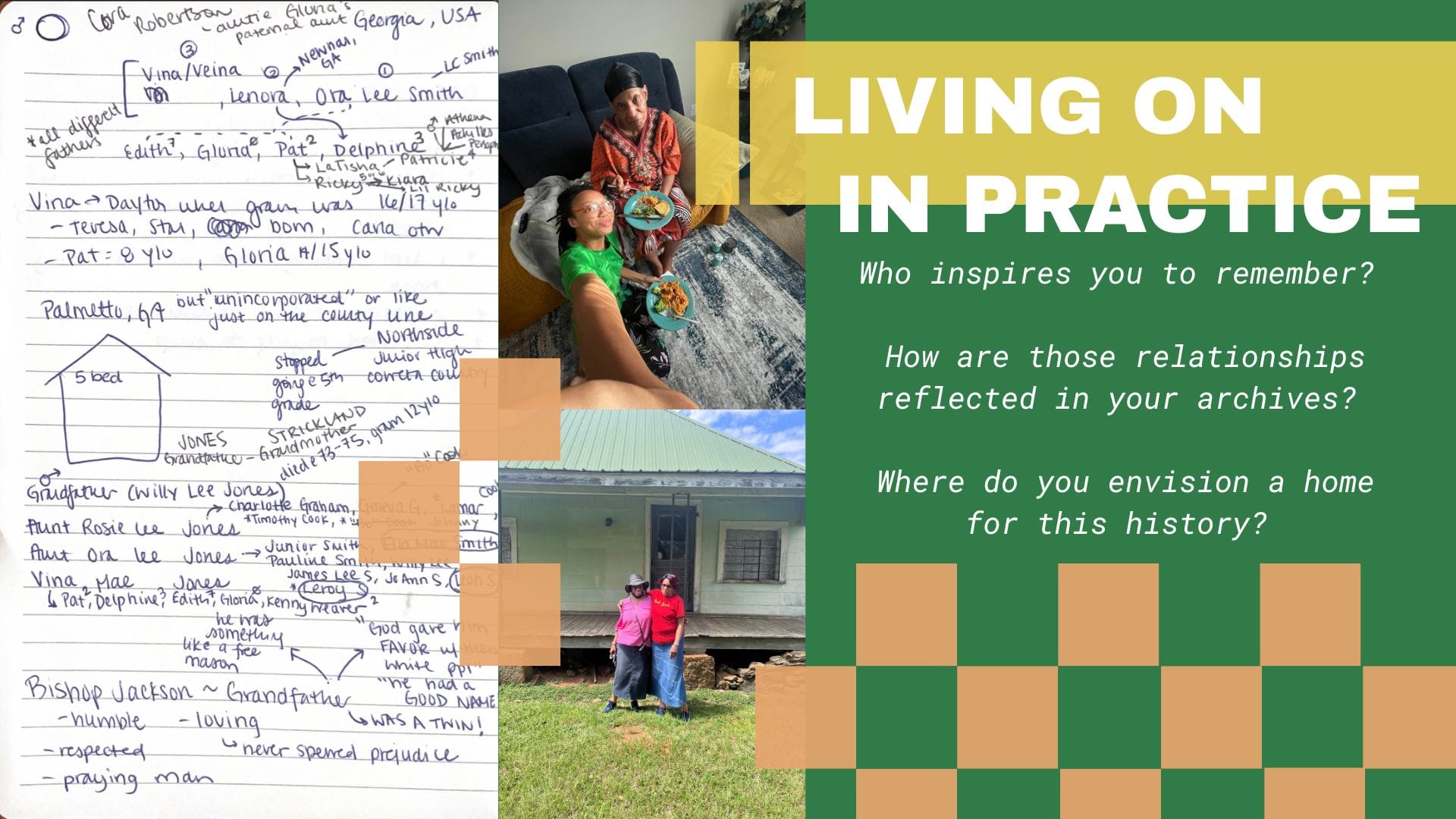
Who inspires you to remember?
How are those relationships reflected in your archives?
Where do you envision a home for this history?
2025 Recommended Reads on Decolonial Memory
Book selects from K. Arnette and K. Malone. Selected titles from this reading list are available as PDFs on PML's public drive.
- Abolition Geography, Ruth Wilson Gilmore
- My Grandmother’s Hands: Racialized Trauma, Resmaa Menakem
- African American Folk Healing, Stephanie Y. Mitchem
- Front Porch Revolution: Resilience Space, Demonic Grounds, and the Horizons of a Black Feminist Otherwise, Laura McTighe and Deon Haywood
- On Abolition Ecologies and Making Freedom as a Place, Nik Heynen & Megan Ybarra
Write-up from Kennedi Malone
On introductions to memory work in daily life
Memory. I used to associate memories with history, the most annoying class in school where all we did was talk about irrelevant things of the past for no apparent reason. No connection to what was going on in my very present world (What am I going to wear to so and so’s sleepover? Are they laughing about my hair? Lord, I should not have let my sister do my braids.) Spending time in the corners of my own mind and with the recollections of my neighbors, though, I realized that there is a reality in which what happened back then is indeed speaking to what is going on right now. They’re making love to each other. They’re shouting at one another.
The family we hold has seen anniversaries and jealousies and heartbreaks that transpired before we were even thought of; but that still hang in the air of every big family dinner, informing Paw Paw’s tone and aunty’s curious inflection. Neighborhoods have been built up and torn down, quick stops giving way to coffee bars and international schools, all of which made it possible for you to daydream where you do, go to sleepovers where you do. Our lives play out alongside and on the backs of the stories of the past. The details of another day inform our very reality; but we can only know how if we look for them. If we seek them. If we take effort to recover those lingering moments and reconstruct the stories that go with them.
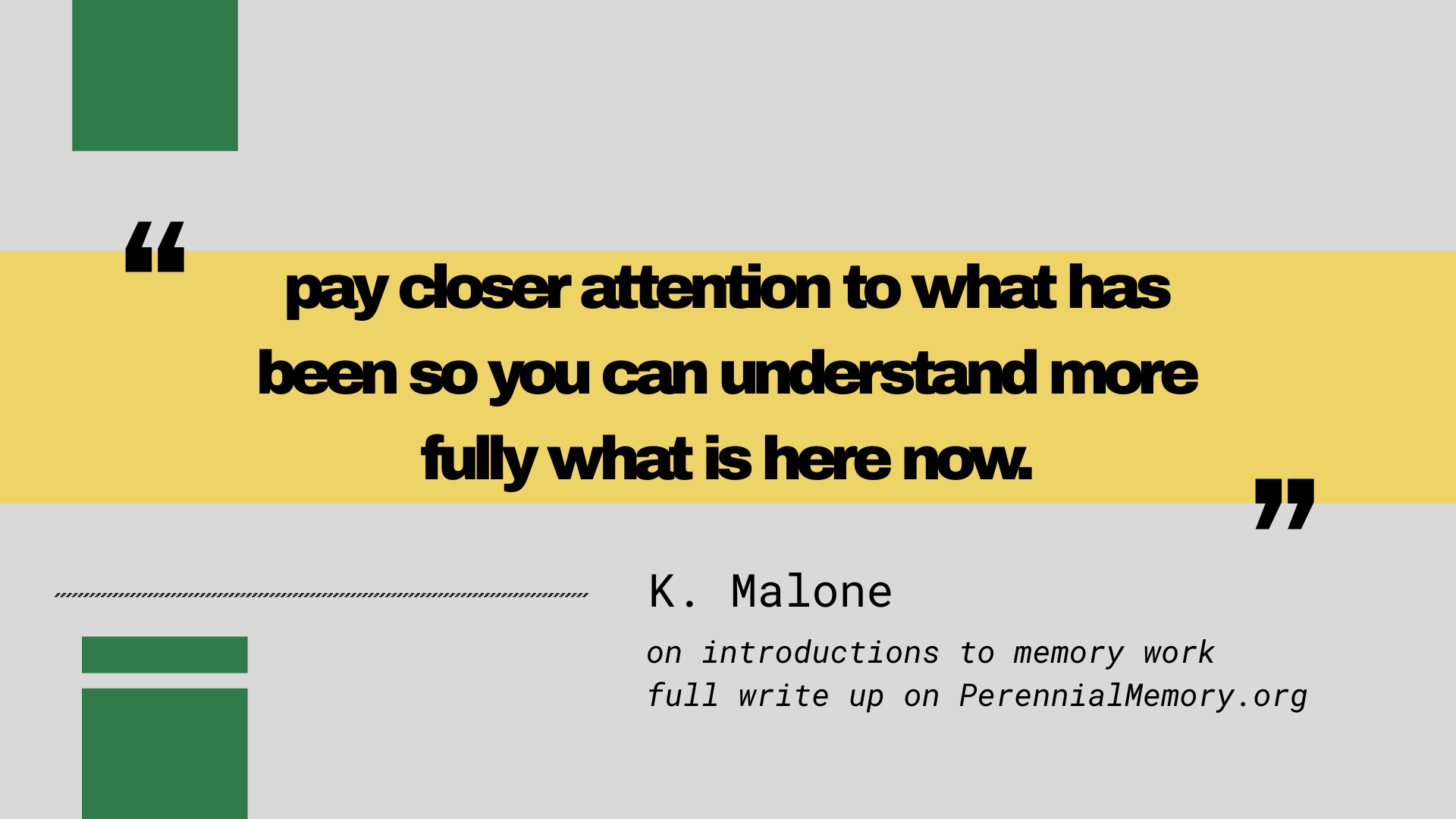
I get encouraged to do this kind of work when I read about Saidiya Hartman’s journey into historical archives, her labor to describe the joy of enslaved Black girls that was never captured in official documents but that she knew existed because she felt it in her own soul–she knew that history was connected to her now. The writings of Laura McTighe and Deon Haywood also spell out the transformative power of remembering what has taken place in the communities, homes, and front porches we know so well. Their works and others are included in a reading list for your perusal here; let them inspire you to remember. Follow their lead to pay closer attention to what has been so you can understand more fully what is here now.
Find more of Kennedi Malone's writing on their newly activated Substack!
Collaborative Reflections from Kennedy Arnette
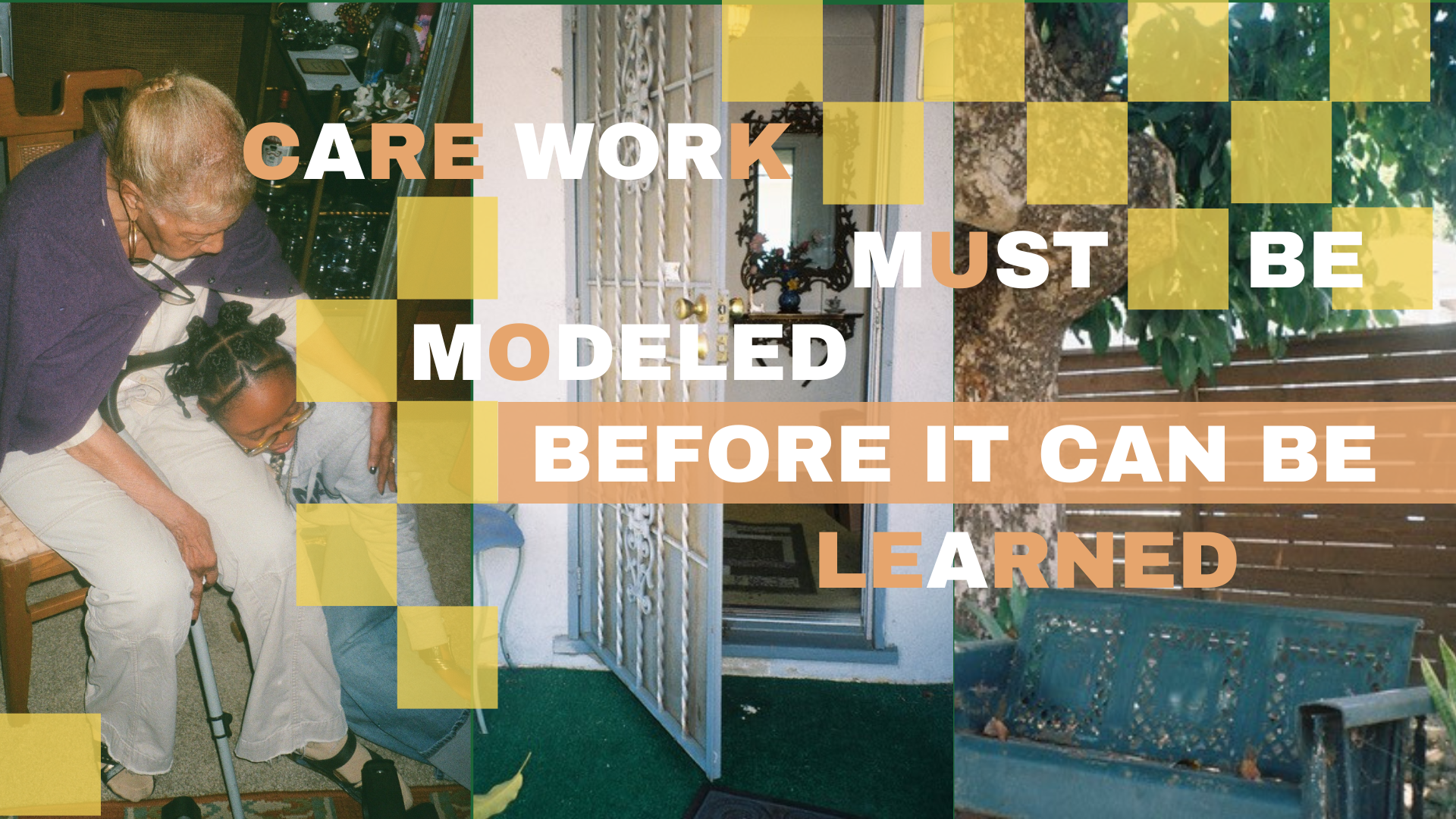
Justice for Black Girls brings together such a far-reaching community of learners, movers, and shakers. You don't have to be a trained archivist to find yourself deep in this work. Even for Kennedi and I, memory work serves more as a vehicle for our developing interests. For this same reason, I like to tell people I was introduced to memory work through the practice of gardening at my Nana's house. Spending time in the garden my late grandfather kept, even if he was not physically there to tell me how to tend to it. I gradually found my way from grassroots organizing to gardening to being the family historian and so on. Boxes of unsorted photos and ephemera no longer seemed so daunting after getting my hands dirty.
The formalities can come later, but Perennial Rememberance is simply the belief that we are descended from a fuller lineage than we may ever know. Ancestral wisdom reveals itself through relationship to the earth and each other. Wherever these ideas may find you in the broader context of you in the broader context of life and work, know there's a place for you in an emerging generation of storytellers.
Special thanks to JBG for having me, and thank YOU for the care and curiosity it took to read this far! I hope you'll enjoy sifting through some of our recommended reads. Perennial Memory Lab is currently in a Fall/Winter programming hiatus so please look forward to more reflections and recaps of recent works soon.
Keep taking care in the meantime!
Member discussion